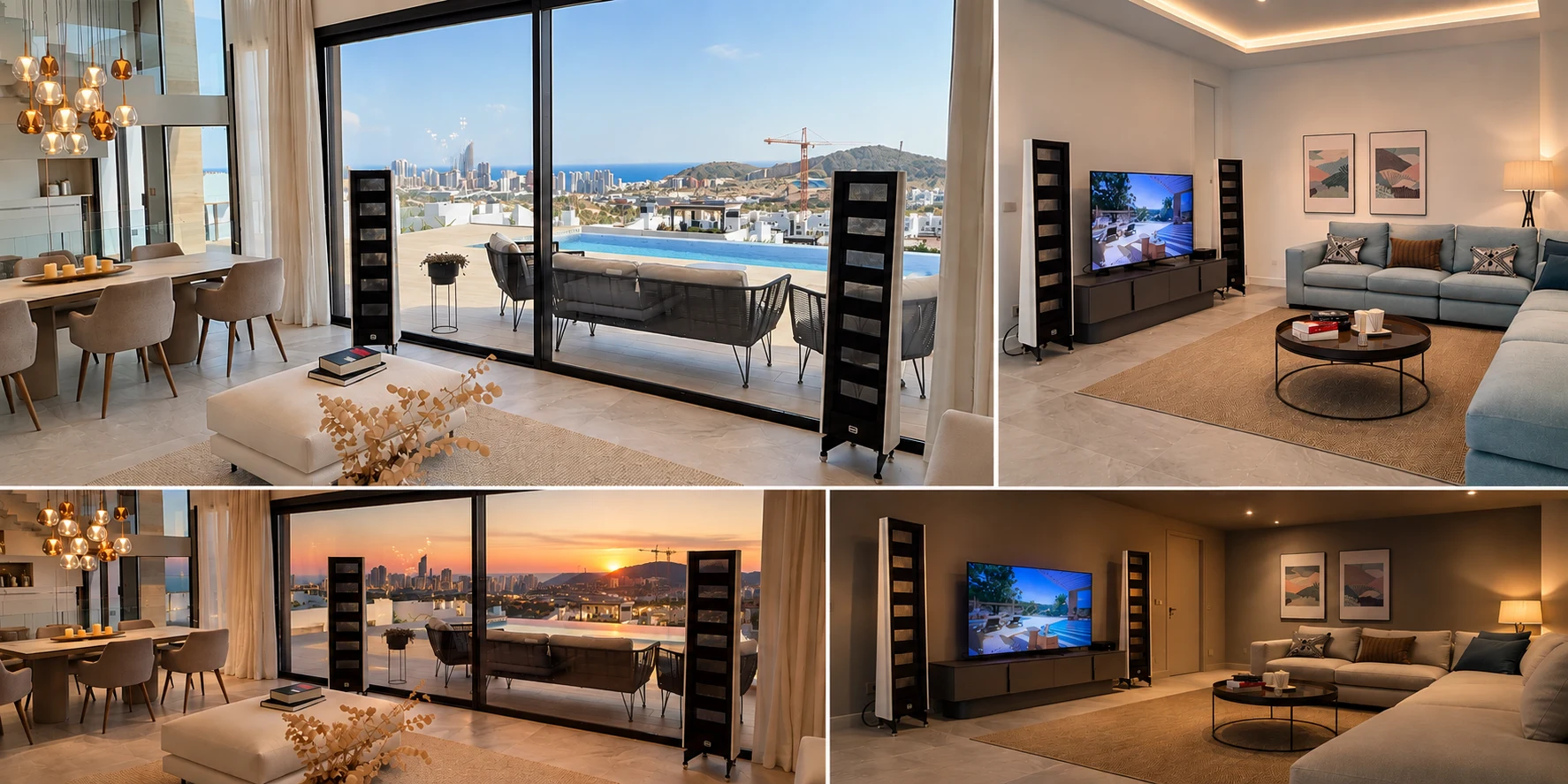
There is a moment in the late afternoon when music suddenly feels like a very good idea. On the Spanish coast, it often happens around seven. The sun is still high enough to remind you that this is Spain, but the intensity of the afternoon has begun to fade. You open the doors, put on some music and, almost without noticing, start using your home differently.
Nothing particularly important has happened. The loudspeakers are the same ones that were there at three o’clock. The room hasn’t changed shape and the view hasn’t moved.
And yet the house feels different.
We have started calling this the 7 PM Rule.
Not because seven is a magic number, and certainly not because Spaniards are preparing for dinner. At seven, dinner is still comfortably somewhere in the future. It is simply the point when the day begins to loosen its grip and the home starts its second shift. And that second shift tells us rather a lot about what makes a home good.
Music Doesn't Always Ask for Your Full Attention
Most of the decisions we make about a home are visual.
We think about the architecture, the view, the way daylight enters a room, the stone on the floor, the wood in the kitchen and whether the sofa really works where we have decided to put it.
Sound tends to arrive somewhat later, sometimes much later.
Which is curious, because the moment we actually begin living in a home, sound becomes part of almost everything we do.
Music is playing while we read, cook or talk. Sometimes it fills the house; sometimes it simply makes the room feel better.
Then there are evenings when we sit down between two loudspeakers and give the music our full attention — one of the great pleasures of a good audio system.
But even the most devoted listeners spend more time living with music than sitting perfectly still in front of it. Life, inconveniently, keeps happening.
A good home should sound wonderful either way.
A Beautiful Room Can Have Terrible Acoustics
This is one of those slightly inconvenient truths that interior photographs rarely mention.
Some of the materials that look wonderful in contemporary Mediterranean architecture are not particularly interested in helping your music.
Large expanses of glass, stone floors, hard walls and open spaces can create spectacular architecture. They can also create a room where sound spends rather too much time bouncing around.
“Your eyes may love six metres of glass. Your loudspeakers may have a slightly different opinion.”
This does not mean turning a beautiful living room into a recording studio. Quite the opposite. It means thinking about sound early enough that the solution becomes part of the architecture rather than something added afterwards.
Acoustic treatment can be beautiful or almost invisible. Loudspeakers can become objects worth looking at, disappear into walls and ceilings, or sit somewhere between the two. A serious stereo system and discreet whole-home audio do not have to be opposing philosophies.
They simply serve different moments in the same home.
Technology Should Know When to Disappear
By early evening, the way we use the space begins to change. The doors may open, music moves between inside and outside, the light becomes warmer and spaces that felt separate during the afternoon begin to connect.
Technology can make this transition almost effortless. Or it can remind you, repeatedly, that somebody installed a lot of technology.
We have reached a slightly strange point where a supposedly intelligent home can require several apps, multiple remotes and a working knowledge of the family Wi-Fi password just to create a pleasant evening. The technology itself may be excellent; it has simply forgotten its manners.
When audio, lighting, climate, shading and control are considered together, they can quietly adapt as the home changes through the day. Instead of managing systems, the people living there can get on with whatever they were planning to do — with the music naturally becoming part of it.
And that brings us back to seven o’clock.
What Happens After the Photograph?
The interesting thing about the 7 PM Rule is that it has very little to do with seven o’clock.
It is really about the difference between a home designed primarily to be seen and one designed around the experience of living in it.
A photograph can show the architecture, the furniture, the materials and the view. What it cannot quite capture is the moment when your favourite music is playing, the light outside has softened and the entire room suddenly feels right.
That experience is difficult to put on a floor plan. It is also difficult to specify on a price list.
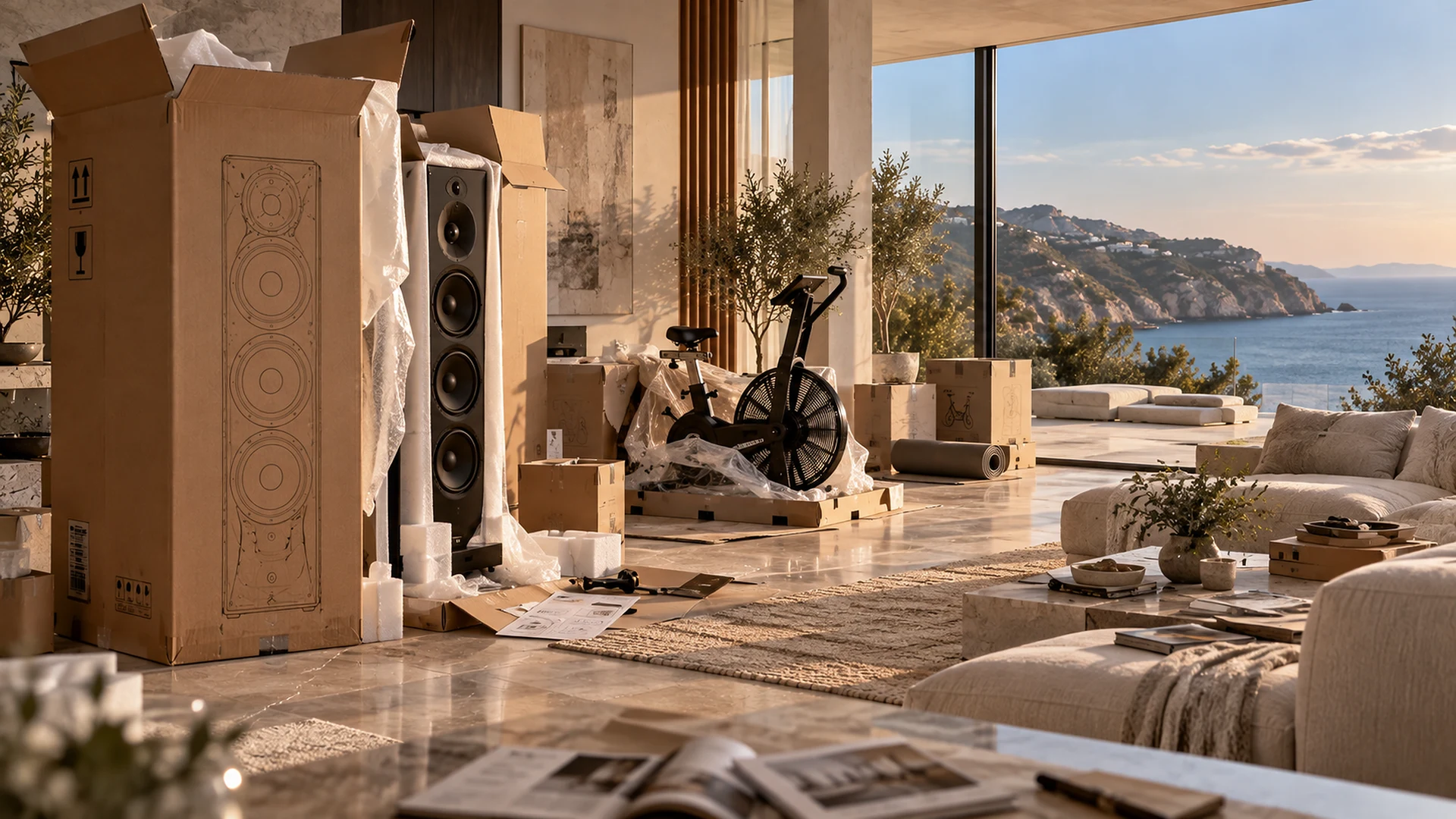
The best homes never stop giving us reasons to enjoy them. But so do the things we bring into them: the music we love, the films we return to and the generously sized audio system we somehow found room for. Even Pilates is better with the right sound.
That is when a beautiful home becomes a personal one — when it makes room for the way we actually like to live.
Perhaps that is the real 7 PM Rule: there should be room for all of it. Preferably before someone has to explain where the loudspeakers are going.